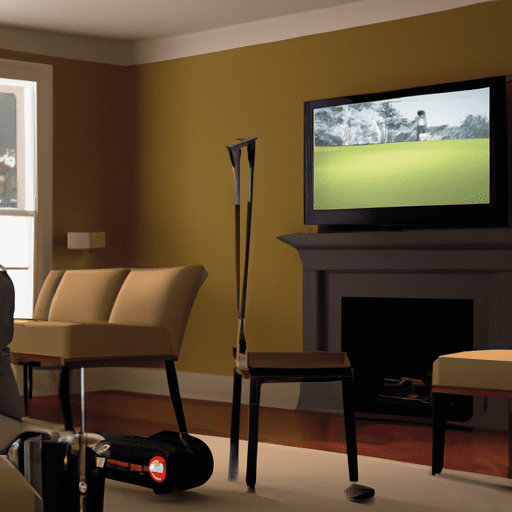
Virtual reality technology has transformed various industries, and golf training is no exception. With the ability to replicate realistic golf environments and provide immersive experiences, virtual reality is revolutionizing the way golfers train and improve their skills. By allowing golfers to practice in any weather condition, play on different courses, and receive real-time feedback, virtual reality is enhancing their training experience, enabling them to fine-tune their technique, and ultimately helping them reach their full potential on the golf course. In this article, we will explore the tangible impact that virtual reality has on golf training and improvement, highlighting its effectiveness in sharpening skills and boosting performance.
Enhanced Visualization
Visualizing the shots
Virtual reality technology has revolutionized the way golfers visualize their shots. With the immersive experience provided by VR, you can now step onto a virtual course and mentally prepare yourself for each shot. By seeing the course and the way it’s laid out, you can strategize and plan your shots in advance, improving the overall accuracy and consistency of your gameplay.
Improving shot accuracy
Through virtual reality, golfers can refine their shot accuracy by simulating various scenarios and adjusting their swing mechanics accordingly. VR technology allows you to analyze and fine-tune your swing in a controlled virtual environment, enabling you to identify flaws and make necessary adjustments. By repeatedly practicing and receiving instant feedback, you can develop muscle memory and improve your shot accuracy over time.
Analyzing swing mechanics
Virtual reality provides golfers with a unique opportunity to analyze their swing mechanics in real-time. By using motion sensors and tracking devices, VR systems can capture and evaluate the subtle nuances of your swing, such as club path, swing angles, and tempo. This data can then be presented visually, allowing you to identify areas for improvement and make necessary adjustments to enhance your swing mechanics.
Realistic Simulation
Creating realistic golf course environments
Virtual reality technology excels at creating highly realistic and immersive golf course environments. Whether it’s a PGA tournament course or a local driving range, VR allows you to experience the course as if you were physically there. The attention to detail in virtual environments, from the grass texture to the sunlight filtering through the trees, enhances the overall training experience and prepares you for real-world golfing situations.
Practicing in different weather conditions
One of the benefits of virtual reality training is the ability to practice in various weather conditions. VR systems can simulate rain, wind, and other weather elements, enabling you to adjust your gameplay and adapt to different scenarios. This versatility allows you to hone your skills regardless of the weather conditions outside, providing more consistency and adaptability to your game.
Integrating various obstacles and hazards
Virtual reality training can simulate a wide range of obstacles and hazards that you would encounter on a real golf course. From sand traps and water hazards to trees and shrubs, VR technology can recreate these challenges in a virtual environment. By practicing and navigating around these obstacles, you can develop the necessary skills and strategies to overcome them in real-life gameplay.
Refined Technique
Correcting swing flaws
Virtual reality training provides an excellent platform for identifying and correcting swing flaws. By analyzing your swing mechanics in a virtual environment, you can pinpoint any inconsistencies or flaws in your technique. With the guidance of virtual coaches or trainers, you can receive real-time feedback on your posture, grip, and swing, allowing you to make adjustments and refine your technique for improved performance on the golf course.
Improving grip and posture
The importance of proper grip and posture cannot be overstated in golf. With virtual reality, you can focus on improving these fundamental aspects of your game. VR systems can help you analyze your hand positioning on the club, the pressure applied, and the overall stance. By making necessary adjustments in a virtual environment, you can develop a consistent grip and posture that will positively impact your swing mechanics and overall performance.
Enhancing muscle memory
Muscle memory plays a crucial role in achieving consistency in golf. By repeatedly practicing your swing in a virtual environment, you can reinforce the correct muscle patterns and movements required for a consistent and fluid swing. Virtual reality training provides the opportunity to engrain these movements into your muscle memory, allowing you to execute them effortlessly and consistently on the golf course.
Instant Feedback
Evaluating shot trajectory and ball speed
One of the key advantages of virtual reality training is the ability to receive instant feedback on shot trajectory and ball speed. By tracking the movement of the virtual ball in real-time, VR systems can provide accurate feedback on the quality of each shot. This instant feedback allows you to analyze the effectiveness of your technique and make necessary adjustments to improve your shot trajectory and ball speed.
Measuring swing angles and club path
Virtual reality technology can accurately measure swing angles and club path, providing golfers with valuable insights into their swing mechanics. By visualizing these metrics in real-time, you can identify any flaws or inconsistencies in your swing, such as an incorrect club path or improper angle of attack. Armed with this information, you can make the necessary adjustments and develop a more efficient swing for improved performance.
Identifying weaknesses and areas for improvement
Virtual reality training allows golfers to identify their weaknesses and areas for improvement with precision. By analyzing various metrics and data collected during training sessions, you can pinpoint specific aspects of your game that require attention. Whether it’s a consistent slice, poor distance control, or difficulties with bunker shots, VR technology provides the tools to diagnose weaknesses and develop targeted training strategies to address them.
Targeted Training
Working on specific aspects of the game
Virtual reality training offers the flexibility to focus on specific aspects of the game that require improvement. Whether it’s putting, chipping, or driving, VR systems can create tailored training modules to target specific skills. By dedicating time and effort to these specific areas, you can accelerate your progress and achieve a well-rounded skillset that covers all aspects of the game.
Developing specific shots and club selection
Virtual reality can assist in developing specific shots and improving club selection. By practicing in virtual environments that replicate real-life scenarios, you can hone your skills in executing shots like fades, draws, and specialty shots. Additionally, VR technology can provide insights into the most suitable club selection for each shot, helping you make informed decisions on the golf course and improve your overall shot selection strategy.
Focusing on mental aspects like concentration and visualization
Golf is as much a mental game as it is a physical one. Virtual reality training can help golfers focus on the mental aspects of the game, such as concentration and visualization. By immersing yourself in realistic virtual environments, you can test and improve your ability to concentrate under pressure, visualize shots, and maintain focus throughout each round. This mental training can greatly enhance your performance on the golf course and improve your overall gameplay.
Convenient Accessibility
Training anytime and anywhere
One of the key benefits of virtual reality training is the ability to train anytime and anywhere. With a VR setup at home or in a training facility, you can engage in golf training sessions without the need to visit a physical course. This convenience allows for more frequent and consistent training, improving your skills and performance over time.
Reducing travel and course fees
Virtual reality training eliminates the need for extensive travel to golf courses and associated fees. With VR, you can experience a wide range of golf courses from around the world without leaving your home. This not only saves time and money but also provides access to premium golf courses that may otherwise be unattainable due to distance or cost constraints.
Catering to different skill levels
Virtual reality training caters to different skill levels, making it accessible and beneficial to beginners and experienced golfers alike. Beginners can use VR to learn the basic mechanics of the game and develop a solid foundation, while advanced players can fine-tune their skills and focus on specific aspects of their gameplay. The versatility of VR training allows golfers at any level to improve their game and progress at their own pace.
Data Analysis and Performance Tracking
Recording and analyzing swing data
Virtual reality technology facilitates the recording and analysis of swing data in great detail. VR systems can capture data on swing mechanics, club speed, tempo, and various other parameters. This comprehensive data can be logged and analyzed, providing valuable insights into your swing mechanics and overall performance. By tracking and monitoring this data over time, you can identify patterns, trends, and areas for improvement, allowing you to refine your training strategies and achieve better results on the golf course.
Tracking performance metrics and progress
Virtual reality training offers accurate tracking of performance metrics and progress. Through data analysis and visualization, you can measure key performance indicators such as accuracy, distance, consistency, and shot shape. Tracking these metrics provides a clear picture of your progress over time, allowing you to set goals and benchmarks for improvement. By monitoring your performance, you can track your development and celebrate milestones along your golfing journey.
Identifying patterns and trends
Virtual reality training provides a wealth of data that can be analyzed to identify patterns and trends in your gameplay. By examining the data collected during training sessions, you may discover recurring flaws in your swing mechanics, consistency issues during specific shots, or trends in your performance under different conditions. This analysis enables you to make informed adjustments to your training regimen and address any recurring weaknesses, leading to enhanced performance and overall improvement.
Motivation and Engagement
Creating immersive and enjoyable training experiences
Virtual reality training creates immersive and enjoyable experiences that keep golfers engaged and motivated. The realistic virtual environments, combined with interactive gameplay and challenges, make training sessions exciting and enjoyable. This high level of engagement enhances motivation and encourages golfers to dedicate more time and effort to their training, resulting in improved skills and overall performance on the golf course.
Competing against virtual opponents
Virtual reality training allows golfers to compete against virtual opponents, adding an element of competition and excitement to training sessions. Whether it’s playing against AI-controlled players or competing against your previous best score, virtual opponents provide a challenging and motivating experience. Engaging in friendly competition or aiming for high scores in virtual tournaments can boost competitiveness and drive you to excel in your golf game.
Setting goals and challenges
Virtual reality training encourages goal-setting and challenges. With the ability to track performance metrics and monitor progress, you can set specific goals for improvement. Whether it’s increasing accuracy, improving distance, or reducing the number of strokes per round, VR technology allows you to set measurable goals that can be tracked and achieved over time. These goals and challenges provide focus and motivation, driving you to push your limits and continually strive for improvement.
Injuries Prevention and Rehabilitation
Reducing strain on joints and muscles
Virtual reality training offers a low-impact training alternative, reducing strain on joints and muscles. Traditional golf training can put significant stress on the body, especially if not executed with proper technique. However, VR training eliminates the physical demands of repeatedly swinging a club while still providing the opportunity to practice and refine your swing mechanics. This reduction in strain can help prevent injuries and facilitate rehabilitation for existing golf-related injuries.
Designing customized training programs
Virtual reality technology allows for the design of customized training programs to address specific injuries or rehabilitation needs. By working with healthcare professionals and virtual trainers, personalized training regimens can be created to accommodate physical limitations, promote healing, and strengthen specific muscles and joints. This tailored approach to training ensures that golfers can safely continue their practice while undergoing rehabilitation or recovering from injuries.
Aiding in rehabilitation after injuries
Virtual reality training can aid in the rehabilitation process after golf-related injuries. By recreating realistic golfing scenarios in a controlled virtual environment, golfers can gradually regain their strength, coordination, and technique. VR systems can assist in improving balance, range of motion, and muscle strength to aid in the recovery and rehabilitation process. This technology helps golfers get back on the course sooner and with reduced risk of further injury.
Collaborative Training and Coaching
Connecting with trainers and experts remotely
Virtual reality training facilitates remote collaboration with trainers and golfing experts. Through virtual platforms, trainers can provide personalized feedback, instruction, and guidance regardless of geographical location. This connectivity enables golfers to access the expertise and knowledge of professionals who may otherwise be geographically inaccessible. The ability to interact remotely with experienced mentors enhances the training experience and accelerates skill development.
Receiving personalized feedback and instruction
Virtual reality technology enables golfers to receive personalized feedback and instruction tailored to their specific needs. Trainers and virtual coaches can analyze your swing mechanics, posture, grip, and other aspects of your game, providing targeted feedback and guidance for improvement. This personalized approach enhances the effectiveness of training sessions and ensures that your training aligns with your individual requirements and goals.
Collaborating with other golfers for practice or competitions
Virtual reality training encourages collaboration and engagement with other golfers. Through VR platforms, golfers can join virtual training sessions, practice rounds, or friendly competitions with players from around the world. The ability to interact and engage with fellow enthusiasts fosters a sense of community, allowing for shared learning, friendly competition, and camaraderie. Collaborative training can provide additional motivation, new perspectives, and an enhanced training experience overall.
In conclusion, virtual reality has had a significant impact on golf training and improvement. Through enhanced visualization, realistic simulation, refined technique, instant feedback, targeted training, convenient accessibility, data analysis and performance tracking, motivation and engagement, injury prevention and rehabilitation, and collaborative training and coaching, golfers can now train more effectively, efficiently, and enjoyably. With the continued advancements in virtual reality technology, the future of golf training looks promising, offering golfers innovative tools and techniques to enhance their skills and achieve their full potential on the golf course.