
Are you looking to enhance your core stability and balance? If so, you’re in luck! This article explores effective techniques and exercises that can help you improve your core strength and overall balance. By incorporating these strategies into your fitness routine, you’ll not only enhance your physical performance but also reduce the risk of injuries. Get ready to discover the key to a stronger, more stable core!
1. Importance of Core Stability and Balance
Core stability and balance are crucial elements of overall fitness and well-being. By focusing on improving these areas, you can prevent injuries, enhance performance in various activities, and improve your posture.
1.1 Preventing Injuries
Having a strong and stable core can significantly reduce the risk of injuries, both in daily life and during physical activities. The core muscles, including the abdominals, back muscles, and pelvic floor muscles, provide support and stability to the spine and pelvis. When these muscles are weak or imbalanced, it can lead to poor posture, back pain, and an increased risk of injuries such as sprains and strains.
By improving core stability, you can better protect your spine and joints, minimizing the risk of accidents and falls. Whether you’re lifting heavy objects, participating in sports, or just going about your daily activities, a strong core will help you maintain proper alignment and support your body’s movements.
1.2 Enhancing Performance
In addition to injury prevention, having a strong core also enhances your overall physical performance. Core stability plays a crucial role in almost every movement you make, whether it’s bending, twisting, reaching, or even just maintaining a stable standing or seated position.
When your core muscles are strong and balanced, they act as a solid foundation for your entire body, improving your overall strength, power, and endurance. This, in turn, can help you excel in various physical activities such as sports, weightlifting, and even everyday tasks like carrying groceries or playing with your children.
1.3 Improving Posture
Having good posture not only makes you look more confident and attractive, but it also has a significant impact on your overall health and well-being. Poor posture, often caused by a weak core, can lead to a range of issues such as back and neck pain, muscle imbalances, and decreased lung capacity.
Improving core stability can help you achieve and maintain proper posture. Strong core muscles support your spine, allowing it to maintain its natural alignment. This helps alleviate strain on the muscles, joints, and ligaments, reducing the risk of pain and discomfort associated with poor posture.
2. Understanding Core Stability
To develop better core stability and balance, it is important to have a clear understanding of what they entail.
2.1 Definition and Components
Core stability refers to the ability of the muscles in your trunk to work together efficiently and effectively to maintain a stable and balanced position. It involves both the deep and superficial muscles of the abdomen, lower back, hips, and pelvic floor.
The components of core stability include muscular strength, endurance, coordination, and control. These elements work together to provide a solid foundation for movement and to stabilize the spine and pelvis.
2.2 Importance of a Strong Core
A strong core is essential for maintaining optimal body mechanics and preventing injuries. When your core muscles are weak, other muscles compensate for the lack of stability, leading to imbalances and increased stress on other body parts.
By developing a strong core, you can ensure that your body moves as a cohesive unit, reducing the risk of overuse injuries and enhancing your overall movement quality. Additionally, a strong core supports proper posture, which is crucial for spinal health and overall well-being.
2.3 Core Muscles and Their Functions
Numerous muscles contribute to core stability and balance. Some of the key muscles include:
- Rectus abdominis: This muscle, commonly referred to as the “six-pack,” is responsible for flexing the spine, such as during sit-ups or crunches.
- Transverse abdominis: The deepest layer of abdominal muscles, the transverse abdominis, acts like a corset, providing stability and compression to the abdomen and spine.
- Obliques: The internal and external obliques play a crucial role in rotation and side bending of the trunk.
- Erector spinae: These muscles are located along the spine and play a vital role in maintaining proper posture and spine stability.
- Gluteal muscles: The gluteal muscles, particularly the gluteus medius and gluteus maximus, contribute to pelvic stability and hip extension.
Developing strength and coordination in these muscles is essential for improving core stability and balance.
3. Assessing Core Stability and Balance
Before embarking on a core stability and balance training program, it is important to assess your current level of stability and balance. This will help identify areas that need improvement and allow you to track your progress over time.
3.1 Functional Movement Screening
Functional Movement Screening (FMS) is a popular method used to assess overall movement patterns and identify potential imbalances and limitations. It involves a series of tests and exercises that evaluate mobility, stability, and neuromuscular control. By assessing how well your body moves as a unit, FMS can help identify any weak links or areas of dysfunction.
A trained professional can guide you through the FMS and provide insights into your core stability and balance. Based on the results, they can recommend appropriate exercises and corrective strategies.
3.2 Balance Tests
Balance tests are another useful tool for assessing core stability and balance. These tests typically involve challenging your body’s ability to maintain equilibrium in different positions and situations.
Common balance tests include the single-leg stance, Romberg test, and tandem walk. These tests help evaluate your proprioception (awareness of your body’s position in space), static and dynamic balance, and overall stability.
3.3 Core Strength Assessment
Assessing core strength is also essential in understanding your baseline stability and identifying areas for improvement. This can be done through various exercises, such as planks, side planks, or exercises using resistance bands.
By performing these exercises and paying attention to your form and level of difficulty, you can gain insights into your core strength and identify areas that need attention.
4. Effective Core Stability and Balance Exercises
Now that you understand the importance of core stability and balance and have assessed your current level, it’s time to incorporate effective exercises into your routine. Here are some exercises that target different aspects of core stability and balance:
4.1 Plank Variations
Planks are incredibly effective exercises for developing core strength and stability. Traditional planks involve holding a push-up position, engaging your abdominal muscles and maintaining a neutral spine.
To add variety and challenge, you can try different plank variations such as side planks, forearm planks, or plank with leg lifts. These exercises engage various muscle groups and help improve spinal stability and overall core strength.
4.2 Dead Bug Exercises
Dead bug exercises target the muscles of the core while challenging your coordination and balance. To perform a dead bug exercise, lie on your back with your arms extended towards the ceiling and your legs bent at 90 degrees. Slowly extend opposite arm and leg while maintaining a stable core and neutral spine.
This exercise helps improve spinal stability and teaches your core muscles to work together in a coordinated manner.
4.3 Russian Twists
Russian twists target the obliques, which play a crucial role in rotational movements and side bending of the trunk. To perform a Russian twist, sit on the ground with your knees bent and feet off the floor. Hold a weight or medicine ball in front of your chest, and rotate your torso from side to side while maintaining a stable core.
This exercise helps improve rotational stability and strengthens the muscles responsible for twisting movements.
4.4 Glute Bridges
Glute bridges primarily target the gluteal muscles while also engaging the core and lower back muscles. To perform a glute bridge, lie on your back with your knees bent and feet on the ground. Lift your hips off the ground while squeezing your glutes and engaging your core.
This exercise helps improve hip stability and strengthens the muscles responsible for maintaining proper alignment of the pelvis and lower back.
4.5 Bird Dogs
Bird dogs are a great exercise for developing core stability and balance. Start on all fours with your hands directly below your shoulders and your knees below your hips. Extend one arm and the opposite leg while maintaining a stable core and neutral spine. Alternate sides.
This exercise challenges your core muscles to stabilize your body while performing dynamic movements, helping improve coordination and balance.
5. Incorporating Balance Training
In addition to core stability exercises, incorporating specific balance training exercises can further enhance your stability and overall balance. Here are some exercises to consider:
5.1 Single-Leg Exercises
Single-leg exercises such as single-leg deadlifts, lunges, and step-ups are excellent for improving balance and stability. These exercises require you to stand on one leg while performing various movements, challenging your body’s ability to maintain equilibrium.
By incorporating single-leg exercises into your routine, you can improve your balance, strengthen the muscles responsible for stability, and reduce the risk of falls and injuries.
5.2 Bosu Ball Training
Bosu balls are versatile training tools that can add an extra dimension to your balance training routine. These inflatable platforms with a flat side and a dome-shaped side challenge your stability by adding an unstable surface.
Exercises like squats, lunges, and planks performed on a Bosu ball require you to engage your core and stabilizing muscles to maintain your balance, further enhancing your core stability and balance.
5.3 Stability Ball Workouts
Stability balls, also known as exercise or Swiss balls, are another excellent tool for incorporating balance training into your routine. These large inflatable balls challenge your stability by providing an unstable surface.
Exercises such as stability ball squats, hamstring curls, or seated twists require you to engage your core muscles to stay balanced while performing the movements. Stability balls are particularly effective for targeting the deep core muscles and improving overall stability.
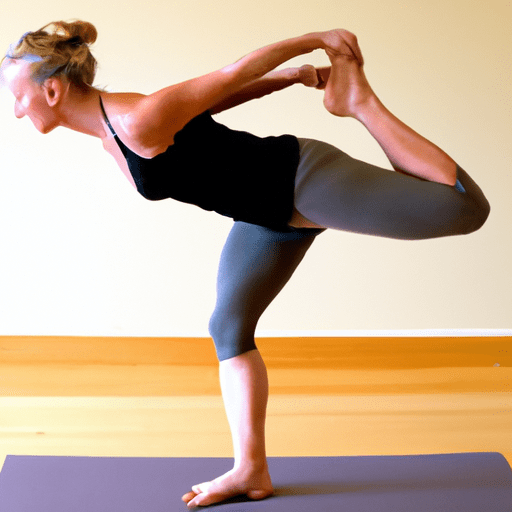
5.4 Yoga and Pilates for Balance
Yoga and Pilates are popular forms of exercise that incorporate balance training and core stability work. These disciplines focus on body awareness, controlled movements, and proper alignment, making them ideal for improving balance and stability.
Practicing yoga or Pilates regularly can help enhance your proprioception, strengthen your core muscles, and develop better overall balance and stability.
6. Core Stability and Balance Training Equipment
While many core stability and balance exercises can be performed with just your body weight, incorporating training equipment can add variety and increase the challenge. Here are some commonly used equipment:
6.1 Stability Balls
Stability balls, as mentioned earlier, are versatile tools for improving core stability and balance. They challenge your stability by providing an unstable surface and can be used for a wide range of exercises targeting different muscle groups.
Choose a stability ball appropriate for your height and weight, and ensure it is properly inflated to provide optimal support and challenge.
6.2 Bosu Balls
Bosu balls are great for incorporating balance training into your routine. They consist of a flexible dome connected to a solid platform, providing an unstable surface when used in various exercises.
Bosu balls can be used for strength training, stability exercises, and dynamic movements, making them a valuable tool for improving core stability and balance.
6.3 Resistance Bands
Resistance bands are inexpensive, portable, and versatile tools that can be used for resistance training and enhancing core stability. They can be attached to different points of your body or fixed to a stable surface to provide resistance during various exercises.
Using resistance bands can add an external challenge to your core stability exercises, helping you build strength and stability.
6.4 Balance Boards
Balance boards consist of a platform or board that is balanced on a fulcrum. By standing or performing exercises on a balance board, you challenge your balance and stability.
Balance boards can be a fun and effective way to enhance your core stability and balance, especially when performing exercises that mimic movements you encounter in daily life or sports.
7. Core Stability and Balance in Sports
Core stability and balance training are particularly beneficial for athletes of all levels. Here’s why:
7.1 Benefits for Athletes
A strong and stable core is essential for athletes as it serves as a solid foundation for optimal performance. It allows for efficient transfer of power between the upper and lower body, enhances agility, and provides stability during dynamic movements.
By improving core stability, athletes can generate more power, prevent injuries, and improve their overall performance in their respective sports.
7.2 Sport-Specific Training
Different sports require different movements and intensities, and therefore the specific core stability and balance exercises needed may vary. Working with a knowledgeable trainer or coach can help tailor your training program to meet the demands of your particular sport.
For example, a tennis player might benefit from exercises that enhance rotational stability, while a soccer player might focus on exercises that improve balance and quick change of direction.
7.3 Injury Prevention Strategies
Athletes are often prone to various injuries due to the physical demands of their sport. Incorporating core stability and balance training into their conditioning program can significantly reduce the risk of injuries, such as sprained ankles, ACL tears, or back pain.
By focusing on strengthening the core and improving balance, athletes can enhance their body’s ability to absorb forces, maintain stability, and withstand the demands of their sport.
8. Incorporating Core Stability into Daily Activities
Improving core stability and balance is not limited to specific exercises or training sessions. You can also incorporate these principles into your daily activities to further enhance your stability and reduce the risk of injuries. Here’s how:
8.1 Standing and Sitting with Proper Alignment
Maintaining proper alignment while standing and sitting can significantly improve your core stability and posture. Focus on keeping your spine neutral, shoulders relaxed, and core engaged.
Avoid slouching or leaning on one side, as this can lead to imbalances and strain on the spine and surrounding muscles. Practice good posture throughout the day, whether you’re at work, walking, or standing in line.
8.2 Lifting and Carrying Techniques
When lifting or carrying objects, proper core engagement and stability are essential to prevent injuries. Before lifting, engage your core muscles, maintain a neutral spine, and use your legs rather than your back to generate power.
Avoid twisting your spine while lifting or carrying objects. Instead, pivot with your feet and engage your core muscles to maintain stability and protect your back.
8.3 Balance Training while Walking or Running
Incorporate balance training into your walking or running routine. For example, while walking, focus on walking along curb edges or on uneven terrain, challenging your balance and stability.
When running, include dynamic movements such as high knees, butt kicks, or lateral shuffle steps to further engage your core and enhance your stability.
9. Core Stability and Balance for Seniors
Maintaining good core stability and balance becomes increasingly important as we age. Here’s why:
9.1 Maintaining Independence
Good core stability and balance are crucial for maintaining independence and minimizing the risk of falls among seniors. Fall prevention is a priority to ensure seniors can continue to live an active and fulfilling life.
By incorporating core stability and balance exercises into their routine, seniors can build strength and stability, reducing the risk of falls and promoting overall well-being.
9.2 Fall Prevention
Fall-related injuries are a significant concern for seniors and can have severe consequences. Improving core stability and balance can help prevent falls by enhancing muscle strength and coordination.
By targeting the core muscles, seniors can improve their body’s ability to maintain balance, react to unexpected movements, and recover from loss of balance.
9.3 Functional Exercises for Daily Living
Seniors can benefit from performing exercises that mimic movements encountered in their daily lives. Functional exercises that challenge balance and stability, such as standing on one leg while picking up an object or practicing step-ups, can help seniors maintain and enhance their core stability and balance.
By focusing on exercises that directly relate to daily activities, seniors can improve their ability to perform everyday tasks with greater ease and confidence.
10. Core Stability and Balance for Rehabilitation
Core stability and balance training also play a crucial role in rehabilitation from injuries, surgeries, and specific medical conditions. Here’s how:
10.1 Rehabilitation from Injuries
After sustaining an injury, rehabilitating the affected area is essential for a full recovery. However, it is equally important to address core stability and balance to prevent further injuries and ensure a successful return to physical activity.
By incorporating core stability and balance exercises into an injury rehabilitation program, you can strengthen the surrounding muscles, enhance stability, and improve overall movement quality.
10.2 Post-Surgical Recovery
Many surgical procedures can negatively impact core stability and balance. For example, surgeries on the abdomen, lower back, or hips can cause weakness or imbalances in the core muscles.
Implementing targeted core stability and balance exercises in post-surgical recovery can help restore strength, improve stability, and promote proper movement patterns.
10.3 Balance Training for Neurological Conditions
Individuals with neurological conditions such as Parkinson’s disease or stroke often experience issues with balance and stability. Core stability and balance training can be an integral part of their rehabilitation program.
By targeting the core muscles and incorporating balance exercises, individuals with neurological conditions can improve their overall stability, reduce the risk of falls, and enhance their ability to perform daily activities.
In conclusion, developing better core stability and balance is essential for injury prevention, enhanced performance, improved posture, and overall well-being. By understanding the components of core stability, assessing your current level, and incorporating effective exercises, you can strengthen your core muscles, improve balance, and reap the numerous benefits in all aspects of life. Whether you’re an athlete, a senior, or recovering from an injury, prioritizing core stability and balance training can have a significant positive impact on your overall health and quality of life. So why wait? Start incorporating these exercises and principles into your routine today and enjoy the benefits of a strong and stable core!