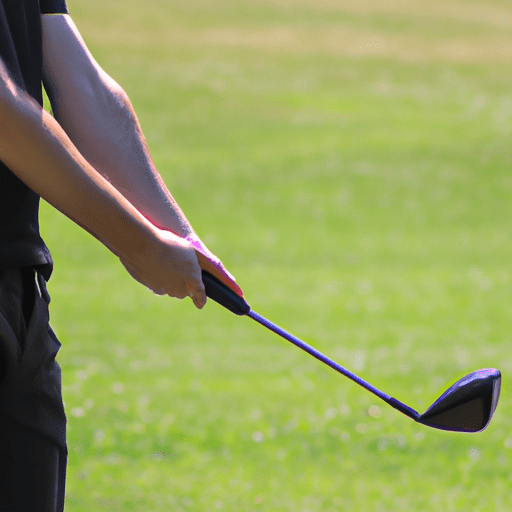
If you’re looking to enhance your golf swing mechanics, you’ve come to the right place! In this article, we will explore a range of exercises that can effectively strengthen and fine-tune your golf swing. Whether you’re a beginner or an experienced golfer, incorporating these exercises into your routine will help you achieve a more consistent and powerful swing, enabling you to take your golf game to the next level. So, grab your clubs and get ready to improve your swing with these tried-and-tested exercises!
1. Stretching Exercises
1.1 Neck Stretches
Stretching your neck muscles is essential for maintaining good posture and reducing tension during your golf swing. To perform neck stretches, sit or stand tall and slowly tilt your head to one side, feeling a gentle stretch along the opposite side of your neck. Hold the stretch for 10-15 seconds and then repeat on the other side. You can also gently rotate your head in a circular motion, both clockwise and counterclockwise, to further loosen up your neck muscles.
1.2 Shoulder Stretches
Flexible shoulders are crucial for achieving a fluid and powerful golf swing. One effective shoulder stretch involves standing tall and bringing your arm across your chest, gently pulling it with your opposite hand until you feel a stretch in your shoulder. Hold for 10-15 seconds and repeat on the other side. Another beneficial stretch is to interlace your fingers behind your back and push your hands downward, opening up your chest and stretching your shoulders.
1.3 Arm and Wrist Stretches
Proper flexibility in your arms and wrists allows for a smooth and controlled golf swing. Start by extending one arm in front of you and using your opposite hand to gently pull your fingers back towards you, feeling a stretch in your forearm. Hold for 10-15 seconds and switch to the other arm. To stretch your wrists, extend one arm straight out with your palm facing up, then use your opposite hand to gently pull your fingers towards you. Hold for 10-15 seconds and repeat on the other side.
1.4 Core and Torso Stretches
A strong and flexible core is vital for generating power and stability in your golf swing. One effective core stretch is the standing side bend. Stand tall with your feet hip-width apart and reach one arm overhead, gently leaning to the opposite side until you feel a stretch along your torso. Hold for 10-15 seconds and repeat on the other side. Additionally, a seated torso rotation stretch can help improve spinal mobility. Sit tall in a chair, cross your arms over your chest, and slowly rotate your upper body to one side. Hold for 10-15 seconds and then repeat on the other side.
2. Balance and Stability Exercises
2.1 Single Leg Stance
Balance is crucial for maintaining stability throughout your golf swing. Stand tall with your feet hip-width apart and slowly lift one foot off the ground, balancing on the opposite leg. Try to hold the position for 30-60 seconds, focusing on keeping your core engaged and your body stable. For an added challenge, you can perform this exercise with your eyes closed. Switch legs and repeat.
2.2 Standing on an Unstable Surface
To further improve your balance and stability, incorporate standing on an unstable surface into your exercise routine. This can be done using a balance board, wobble board, or inflatable cushion. Stand on the unstable surface with your feet hip-width apart and try to maintain your balance for 30-60 seconds. As you become more comfortable, you can increase the difficulty by performing small movements or exercises, such as squats or arm circles, while on the unstable surface.
2.3 Heel-to-Toe Walks
Heel-to-toe walks are an excellent exercise for improving your balance and stability while mimicking the weight shift and weight transfer that occurs during a golf swing. Begin by placing your right foot in front of your left foot, touching heel to toe. Take a step forward, once again placing your left foot in front of your right foot. Continue this walking motion, focusing on maintaining your balance and coordination. Aim to perform 10-15 steps in each direction.
2.4 Balancing on a Bosu Ball
To further challenge your balance and stability, try balancing on a Bosu ball. This half-sphere balancing tool can help improve your proprioception and strengthen the muscles involved in maintaining stability. Stand on the Bosu ball with your feet hip-width apart, engaging your core and maintaining a slight bend in your knees. Aim to balance on the ball for 30-60 seconds, gradually increasing the duration as your stability improves.
3. Mobility Exercises
3.1 Hip Rotations
Hip mobility is essential for generating power and maintaining proper swing mechanics in golf. To perform hip rotations, stand with your feet shoulder-width apart and place your hands on your hips. Slowly rotate your hips in a circular motion, first clockwise and then counterclockwise. Aim to perform 10-15 rotations in each direction, focusing on smooth and controlled movements.
3.2 Shoulder Rotations
Dynamic shoulder rotations can help improve the mobility and flexibility of your shoulder joints, allowing for a full range of motion during your golf swing. Start by standing tall with your feet shoulder-width apart and your arms extended straight out to the sides. Begin to make large circular motions with your arms, first forwards and then backwards. Perform 10-15 rotations in each direction, gradually increasing the size of the circles as you feel more comfortable.
3.3 Spine Rotations
Maintaining a mobile and flexible spine is crucial for an efficient golf swing. Stand tall with your feet shoulder-width apart and your hands resting on your hips. Slowly rotate your upper body to one side, keeping your lower body stable. Return to the center and then rotate in the opposite direction. Aim to perform 10-15 rotations on each side, focusing on smooth and controlled movements.
3.4 Wrist and Forearm Mobility
Flexible wrists and forearms are essential for achieving proper club control and consistency in your golf swing. Begin by extending one arm in front of you with your palm facing up. Use your opposite hand to gently pull back on your fingers, feeling a stretch in your forearm and wrist. Hold for 10-15 seconds and then repeat on the other arm. You can also improve wrist mobility by performing wrist circles, both clockwise and counterclockwise.
4. Strengthening Exercises
4.1 Squats
Strengthening your lower body muscles, particularly your glutes and quadriceps, can improve your stability and power in the golf swing. Squats are a highly effective exercise for targeting these muscle groups. Start by standing with your feet shoulder-width apart and your toes pointing slightly outward. Bend your knees and lower your body down as if sitting into an imaginary chair, keeping your chest lifted and your weight in your heels. Push through your heels to return to the starting position. Aim to perform 10-15 repetitions, gradually increasing the number as your strength improves.
4.2 Lunges
Lunges are another excellent exercise for strengthening your lower body muscles, including your glutes, quadriceps, and hamstrings. Begin by standing tall with your feet hip-width apart. Take a large step forward with your right foot, bending both knees to lower your body down until your right thigh is parallel to the ground. Push through your right heel to return to the starting position and then repeat on the other side. Aim to perform 10-15 lunges on each leg.
4.3 Deadlifts
Deadlifts are a compound exercise that targets multiple muscle groups, including your glutes, hamstrings, and lower back. Begin by standing with your feet hip-width apart and a barbell or dumbbells in front of you. Hinge at your hips, keeping your back straight and your core engaged, and lower the weights down towards the ground while keeping them close to your legs. Push through your heels and squeeze your glutes to return to the starting position. Aim to perform 8-12 repetitions, gradually increasing the weight as you become stronger.
4.4 Bent-Over Rows
Bent-over rows are an excellent exercise for strengthening your upper back and improving your posture. Begin by standing with your feet hip-width apart, holding a dumbbell or kettlebell in each hand with your palms facing inward. Hinge at your hips, keeping your back flat and your core engaged, and allow the weights to hang down towards the ground. From this position, pull the weights up towards your chest, squeezing your shoulder blades together. Lower the weights back down and repeat for 10-15 repetitions.
5. Posture and Alignment Exercises
5.1 Wall Angels
Wall angels are a great exercise for improving your posture and upper body alignment. Start by standing with your back against a wall, with your heels, buttocks, mid-back, and head touching the wall. Bend your elbows to 90 degrees, with your upper arms parallel to the ground and your forearms pointing upwards. Slowly slide your arms up and down the wall, maintaining contact with the wall at all times. Aim to perform 10-15 repetitions.
5.2 Posture Alignment Drill
Improving your posture alignment can have a significant impact on your golf swing mechanics. To practice proper posture alignment, stand tall with your feet hip-width apart and your knees slightly bent. Imagine a string attached to the top of your head, gently pulling you upward. Engage your core, relax your shoulders, and keep your chin parallel to the ground. Hold this posture for 30 seconds and repeat several times throughout the day.
5.3 Golf Club Posture Drill
Using a golf club as a training aid can help you practice proper posture and alignment in your golf swing. Start by gripping the golf club with both hands, resting it against your back. Stand tall with your feet hip-width apart and your knees slightly bent. Slowly hinge forward from your hips while maintaining a straight back, feeling a stretch in your hamstrings. Maintain this position for a few seconds before returning to the starting position. Repeat this drill several times to reinforce proper posture and alignment.
5.4 Mirror Check Drill
Using a mirror can be an effective way to assess your posture and alignment during your golf swing. Set up in front of a full-length mirror with a golf club in hand. Perform slow and controlled swings while observing your posture and alignment in the mirror. Pay attention to the position of your head, spine, hips, and shoulders. Aim to maintain proper posture throughout your swing, making any necessary adjustments based on what you see in the mirror.
6. Power and Speed Exercises
6.1 Medicine Ball Rotational Throws
Medicine ball rotational throws can help develop rotational power for a more explosive golf swing. Start by standing with your feet shoulder-width apart, holding a medicine ball in both hands. Rotate your hips and shoulders to one side, then explosively rotate back in the opposite direction, throwing the medicine ball against a wall or to a partner. Catch the ball or retrieve it from the wall and repeat on the other side. Aim to perform 8-12 repetitions on each side.
6.2 Kettlebell Swings
Kettlebell swings are a dynamic exercise that targets multiple muscle groups while also improving power and speed. Begin by standing with your feet shoulder-width apart and a kettlebell placed a couple of feet in front of you. Hinge at your hips, grasping the kettlebell handle with both hands, and maintain a slight bend in your knees. Explosively drive your hips forward, swinging the kettlebell up to shoulder height. Allow the kettlebell to swing back down between your legs and repeat for 10-15 repetitions.
6.3 Plyometric Box Jumps
Plyometric box jumps are a powerful exercise for developing explosive lower body strength and generating more speed in your golf swing. You will need a sturdy box or platform for this exercise. Begin by standing in front of the box with your feet shoulder-width apart. Bend your knees and swing your arms back before explosively jumping onto the box, landing softly with your knees bent. Step or jump back down and repeat for 8-12 repetitions.
6.4 Resistance Band Rotations
Resistance band rotations are an effective exercise for strengthening your core and building rotational power. Start by attaching a resistance band to a stable anchor point at chest height. Stand perpendicular to the anchor point, grasping the band handle with both hands. Gradually rotate your entire body away from the anchor point, stretching the band. Return to the starting position and repeat for 10-15 repetitions on each side.
7. Flexibility and Range of Motion Exercises
7.1 External Shoulder Rotation Stretch
Maintaining flexibility in your shoulder joints is crucial for achieving a full range of motion in your golf swing. Stand tall with your feet shoulder-width apart and hold a resistance band or towel in one hand. Extend your arm out to the side, bending your elbow at a 90-degree angle. Use your opposite hand to gently pull the resistance band or towel, rotating your arm externally until you feel a stretch in your shoulder. Hold for 10-15 seconds and repeat on the other side.
7.2 Hamstring Stretch
Flexible hamstrings can help improve your posture and allow for a better weight shift in your golf swing. Begin by standing tall with your feet hip-width apart. Take a step forward with your right foot and extend your left leg straight out in front of you, resting your heel on the ground. Slowly hinge forward at your hips, reaching towards your toes until you feel a stretch in the back of your left leg. Hold for 10-15 seconds and then repeat on the other side.
7.3 Thoracic Spine Extension Stretch
The thoracic spine plays a crucial role in your golf swing and maintaining proper posture. Start by sitting on a foam roller or rolled-up towel with your knees bent and your feet flat on the ground. Place your hands behind your head, elbows pointing out to the sides. Slowly lean back, using the foam roller or towel to support your mid-back. Arch your upper back over the roller, feeling a stretch in your thoracic spine. Hold for 10-15 seconds and repeat several times.
7.4 Wrist Flexor Stretch
Flexible wrists are vital for achieving optimal grip strength and control in your golf swing. Begin by extending one arm in front of you, palm facing up. Use your opposite hand to gently pull your fingers back towards you, feeling a stretch in the muscles on the inside of your forearm. Hold for 10-15 seconds and then repeat on the other arm. This stretch can also be performed with the palm facing down, targeting the muscles on the outside of the forearm.
8. Coordination and Timing Exercises
8.1 Cross Crawl Exercise
The cross crawl exercise is a great way to improve coordination and timing in your golf swing. Begin by standing tall with your arms extended straight out in front of you. Lift your right knee up towards your chest while simultaneously reaching your left hand towards your right knee. Lower your right foot and repeat on the other side, lifting your left knee and reaching your right hand towards your left knee. Perform this exercise smoothly and continuously for 30-60 seconds.
8.2 Step and Swing Drill
The step and swing drill helps improve coordination between your lower and upper body during the golf swing. Start by taking a small step forward with your left foot, shifting your weight onto your front foot. As you do this, simultaneously swing a club or a weighted training aid back and forth, mimicking your golf swing. Focus on the synchronization between your step and swing, gradually increasing your speed and power.
8.3 Tempo Training with Metronome
Maintaining a consistent tempo and rhythm in your golf swing can significantly improve your overall performance. To practice tempo training, use a metronome or a rhythm app on your smartphone. Set the metronome to a desired tempo and practice swinging the club in sync with the metronome beats. Start with a slow tempo and gradually increase the speed as you become more comfortable. This exercise helps develop your timing and coordination.
8.4 Pitching Wedge Drill
The pitching wedge drill is a fantastic exercise for improving coordination and timing in your short game. Begin by setting up to a golf ball with your pitching wedge. Take a slight pause at the top of your backswing, holding the club at a 45-degree angle to the ground. Then, focus on smoothly transitioning into your downswing, striking the ball cleanly and following through with a controlled swing. This drill helps develop a synchronized and well-timed swing motion.
9. Mental Focus and Visualization Exercises
9.1 Breathing Techniques
Proper breathing techniques can help you maintain focus and relaxation on the golf course. One effective breathing technique is called diaphragmatic breathing. Start by sitting or standing tall and placing one hand on your belly. Take a slow, deep breath in through your nose, feeling your belly expand outward. Exhale slowly through your mouth, allowing your belly to deflate. Repeat this breathing pattern for several breaths, focusing on your breath flowing in and out.
9.2 Mindfulness Meditation
Mindfulness meditation can be a valuable tool for improving your mental focus and reducing distractions on the golf course. Find a quiet and comfortable space where you can sit or lie down without any disturbances. Close your eyes and bring your attention to your breath, observing the sensations of each inhale and exhale. If thoughts or distractions arise, acknowledge them without judgment and gently guide your attention back to your breath. Start with a few minutes of practice and gradually increase the duration over time.
9.3 Visualizing the Perfect Swing
Visualization can help improve your golf swing mechanics by mentally rehearsing the desired movements. Sit or stand in a quiet and relaxed state, closing your eyes. Visualize yourself stepping up to the golf ball, setting up to the target. Imagine making a smooth and controlled swing, feeling the club strike the ball perfectly. Visualize the flight of the ball, seeing it land exactly where you intended. Repeat this visualization exercise regularly, incorporating as many details as possible to enhance the effectiveness.
9.4 Pre-shot Routine
Creating a pre-shot routine can help you maintain focus and build confidence before each shot. Develop a consistent routine that includes visualizing your desired shot, taking a few deep breaths to center yourself, and aligning your body and clubface to the target. This routine helps you focus on the present moment and execute your swing with greater clarity and intention.
10. Practice Drills
10.1 Swing Path Drill
The swing path drill helps you develop a proper swing path and avoid any unwanted slices or hooks. Set up to a golf ball with an alignment stick or a similar training aid placed just outside your target line. Swing the club, aiming to keep the clubhead traveling along the alignment stick on both the backswing and the downswing. This drill encourages a more accurate and consistent swing path.
10.2 Impact Bag Drill
The impact bag drill helps improve your clubface control and the quality of your ball striking. Place an impact bag or a folded towel in front of you. Take your normal address position and swing the club, focusing on striking the bag with a square clubface. The impact bag provides feedback and allows you to work on your timing and the position of your hands at impact.
10.3 Alignment Stick Drill
The alignment stick drill helps promote proper alignment and swing path. Place an alignment stick on the ground parallel to your target line. Set up to the ball with the alignment stick pointing at your intended target. Practice your swing, ensuring that the clubhead stays on the correct swing path while aligning with the stick during the backswing and the downswing. This drill helps develop accuracy and consistency.
10.4 Slow Motion Swing Drill
Performing slow motion swings is an effective way to improve your golf swing mechanics by allowing you to focus on the correct motions. Take your normal address position and swing the club in slow motion, paying attention to each phase of the swing. This drill helps refine your technique, allowing you to make any necessary adjustments and develop a more fluid and efficient swing.
By incorporating these exercises into your golf training routine, you can improve your golf swing mechanics, increase your overall performance, and reduce the risk of injury. Remember to always consult with a qualified golf instructor or fitness professional before beginning any exercise program, and listen to your body to prevent overexertion or strain. With consistency and dedication, you’ll be on your way to a more powerful and precise golf swing. Happy golfing!