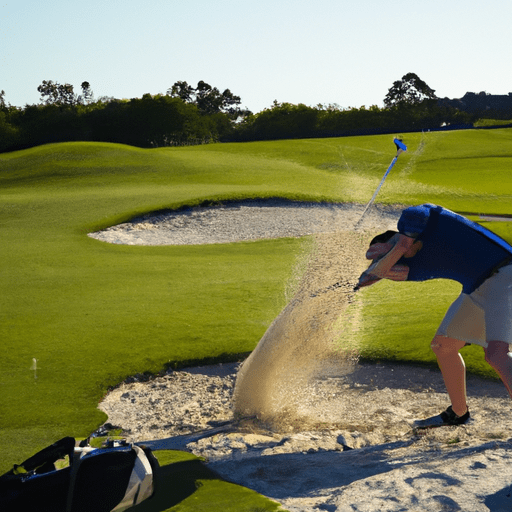
To achieve an impeccable golf swing, it is crucial to focus on strengthening the glutes and hips, as they play a significant role in generating power and stability throughout the swing. By employing targeted exercises that engage these muscle groups, you can enhance your performance on the golf course. In this article, we will explore the various benefits of glute and hip strengthening for golfers and provide practical tips to help you maximize your swing potential. Prepare to discover the key to unlocking a more powerful and efficient golf swing through the improvement of your glutes and hips.
I. Understanding the Importance of Glute and Hip Strength in Golf Swing
A. Overview of the golf swing
The golf swing is a complex and dynamic movement that involves the coordination of various muscle groups working together to generate power and accuracy. It consists of several phases, including the backswing, downswing, and follow-through. Each phase requires specific muscle activation and coordination to achieve an efficient and powerful swing.
B. Role of glutes and hips in the golf swing
The glutes and hips play a crucial role in the golf swing by providing stability, power, and rotational force. The glutes, which include the gluteus maximus, medius, and minimus, are the largest muscles in the body and are responsible for generating power and propulsion during the swing. The hips, on the other hand, act as the axis of rotation and facilitate the transfer of energy from the lower body to the upper body, ensuring a smooth and efficient swing motion.
II. Common Issues Caused by Weak Glutes and Hips
A. Loss of power and distance
Weak glutes and hips can significantly impact the power and distance of your golf shots. When these muscles are not properly activated and strengthened, they fail to generate the necessary force to drive the club through the ball effectively. As a result, your shots may lack the desired distance and consistency, limiting your overall performance on the course.
B. Inconsistency in swing mechanics
In addition to the loss of power, weak glutes and hips can lead to inconsistent swing mechanics. Without the necessary strength and stability in these muscle groups, your body may compensate by relying on other muscle groups, leading to inefficient movement patterns and decreased accuracy. This inconsistency can create inconsistencies in ball striking and make it challenging to achieve a repeating swing.
C. Increased risk of injury
Weak glutes and hips not only affect your performance but also increase your risk of injury. The golf swing puts a significant amount of stress on the lower back and hips, and when the supporting muscles are weak, this stress is not adequately distributed or absorbed. This can lead to overuse injuries, such as strains, sprains, or even more severe conditions like lower back pain or hip injuries.
III. Exercises to Strengthen the Glutes and Hips
A. Warm-up exercises
Before diving into glute and hip strengthening exercises, it is essential to perform proper warm-up exercises to prepare the body for activity. Dynamic stretches, such as leg swings, hip circles, and bodyweight squats, can help increase blood flow, improve flexibility, and activate the glute and hip muscles. A well-rounded warm-up routine can help reduce the risk of injury and optimize performance during the strengthening exercises.
B. Glute strengthening exercises
Targeted glute strengthening exercises can help activate and strengthen the glute muscles, enhancing their ability to generate power during the golf swing. Exercises such as squats, lunges, hip thrusts, and glute bridges are effective in targeting the gluteus maximus and medius. Progressing to resistance band exercises or adding weights can further challenge the muscles and promote strength development.
C. Hip strengthening exercises
Focusing on hip strengthening exercises can improve stability and rotational force during the golf swing. Exercises like lateral band walks, clamshells, lateral lunges, and hip abductions target the muscles in the hips, including the hip abductors and external rotators. Strengthening these muscles helps maintain proper hip alignment and enhances rotational power, ensuring a more efficient and controlled swing.
D. Integrated movements for golf-specific strength
To further enhance the application of glute and hip strength in the golf swing, integrating movements that mimic specific swing actions can be beneficial. Exercises like medicine ball rotations, cable rotations, and kettlebell swings simulate the rotational movement and activation of the glutes and hips during the swing. By incorporating these exercises into your training routine, you can improve golf-specific strength and transfer it directly to your game.
IV. Incorporating Strengthening Exercises into Golf Training
A. Frequency and duration of exercise
To see significant improvements in glute and hip strength for your golf swing, it is important to establish a consistent exercise routine. Aim for two to three sessions per week focusing on glute and hip strengthening exercises. Each session should typically last around 30 to 45 minutes, allowing enough time to perform the exercises with proper form and without rushing through the motions.
B. Balancing strength training with other aspects of golf training
While glute and hip strengthening exercises are essential for optimal swing performance, it is important to strike a balance between strength training and other aspects of golf training. Allocate time for skill development, practicing swing mechanics, and maintaining overall fitness through cardiovascular exercise and flexibility training. Integrating these components into your training plan will help ensure a well-rounded approach to improving your golf swing.
V. Importance of Proper Technique and Form
A. Engaging the correct muscles
When performing glute and hip strengthening exercises, it is crucial to focus on engaging the correct muscles and maintaining proper form. Concentrate on activating the glutes and hips during each exercise to ensure that you are targeting the intended muscle groups effectively. This will not only maximize the benefits but also minimize the risk of compensatory movements and potential injury.
B. Avoiding compensatory movements
Compensatory movements, where other muscle groups take over the work of weak glutes and hips, can hinder the effectiveness of your strengthening exercises. For example, during squats or lunges, it is important to avoid excessive forward lean or relying too much on the quadriceps instead of the glutes and hips. Paying attention to proper form and technique will allow you to target the intended muscles and optimize the results of your training.
VI. Additional Strategies for Improving Golf Swing
A. Golf-specific stretching routine
In addition to glute and hip strengthening exercises, incorporating a golf-specific stretching routine can improve your swing by increasing flexibility and range of motion. Focus on stretches that target the hip flexors, hamstrings, and thoracic spine, as these areas play significant roles in the golf swing. Regular stretching can help improve posture, enhance rotation, and prevent muscle imbalances.
B. Flexibility training for improved range of motion
Flexibility training goes hand in hand with glute and hip strengthening to optimize your golf swing. Activities such as yoga or Pilates can aid in improving overall flexibility, joint mobility, and muscle length. These exercises help create a more fluid and efficient swing by allowing for a greater range of motion. Incorporate stretching and flexibility exercises into your routine to complement your strengthening exercises.
C. Core exercises for stability and transfer of power
Strong and stable core muscles are essential for maintaining balance, generating power, and transferring energy from the lower body to the upper body during the golf swing. Include exercises that target the abdominals, obliques, and lower back such as plank variations, Russian twists, and back extensions. A strong core provides a solid foundation and improves your ability to execute a controlled and powerful swing.
VII. Seeking Professional Guidance and Rehabilitation
A. Working with a golf fitness coach
To optimize your glute and hip strengthening program and address any specific concerns, consider working with a certified golf fitness coach. A professional coach can assess your golf swing mechanics, identify weaknesses or imbalances, and design a customized training program that targets your specific needs. With their expertise and guidance, you can maximize your progress and achieve optimal results in your golf swing.
B. Physical therapy for addressing specific issues
If you have existing injuries or specific issues related to the glutes or hips, seeking the help of a physical therapist can be beneficial. A physical therapist can provide a comprehensive assessment, create a tailored rehabilitation program, and guide you through exercises that promote proper healing and improve strength. They can also offer valuable insights on injury prevention techniques and help you address any movement compensations or imbalances.
C. Rehabilitation after injuries
For golfers recovering from glute or hip injuries, it is important to prioritize a gradual and guided rehabilitation process. Working closely with a physical therapist or sports medicine professional, you can regain strength, flexibility, and mobility while focusing on preventing future injuries. Adhering to a structured rehabilitation program will ensure a safe and effective return to golf, allowing you to continue strengthening your glutes and hips for sustained improvement in your swing.
VIII. Integration of Glute and Hip Strengthening into a Long-Term Training Plan
A. Periodization for optimal results
To achieve lasting improvements in glute and hip strength, it is important to incorporate periodization principles into your training plan. Periodization involves dividing your training into specific phases, each with varying intensities, volume, and focus. This approach allows for progressive overload, adequate recovery, and continual adaptation. Periodize your glute and hip strengthening exercises by adjusting the sets, repetitions, and resistance over time to ensure consistent gains in strength and performance.
B. Monitoring progress and adjusting exercises
Regularly monitor your progress by tracking measurable markers such as increased weight lifted, improved range of motion, or enhanced swing mechanics. These objective measures can help you gauge the effectiveness of your training program and identify areas that may need adjustment. Consult with a golf fitness coach or physical therapist to evaluate your progress and modify exercises or intensity levels to continue challenging yourself and reaching new goals.
C. Consistency and commitment to long-term training
Strengthening your glutes and hips for improved golf swing is a long-term process that requires consistency and commitment. It is important to adhere to your training plan, be patient, and understand that results take time. Stay dedicated to your exercises, even during times when progress may seem slow or plateaued. The more consistent and committed you are, the more likely you are to reap the rewards of enhanced glute and hip strength in your golf swing.
IX. Inclusive Training for Different Skill Levels and Ages
A. Adaptations for beginners and older golfers
Glute and hip strengthening exercises can be adapted to suit individuals of different skill levels and ages. Beginners or older golfers may start with bodyweight exercises or resistance bands, focusing on form and proper muscle activation before progressing to more challenging exercises or heavier resistance. It is important for individuals in this group to consult with a qualified professional to determine appropriate exercises and intensity levels that align with their capabilities and goals.
B. Advanced exercises for experienced players
Experienced golfers who have already established a solid foundation of glute and hip strength can incorporate advanced exercises into their training program to further enhance their swing performance. These exercises may include weighted squats, deadlifts, cable rotations with increased resistance, or plyometric movements. Advanced players should work closely with a qualified fitness coach to ensure proper technique, minimize the risk of injury, and maximize the benefits of advanced exercises.
X. Conclusion
Improving your golf swing through glute and hip strengthening exercises is a valuable investment in your game. Strengthening these muscles not only enhances power and distance, but also promotes consistency and reduces the risk of injury. By incorporating a comprehensive training plan, emphasizing proper technique, and seeking professional guidance when necessary, you can develop a strong and efficient golf swing that translates to improved performance on the course. Stay committed, be patient, and enjoy the process of enhancing your glute and hip strength for a better and more enjoyable golfing experience.