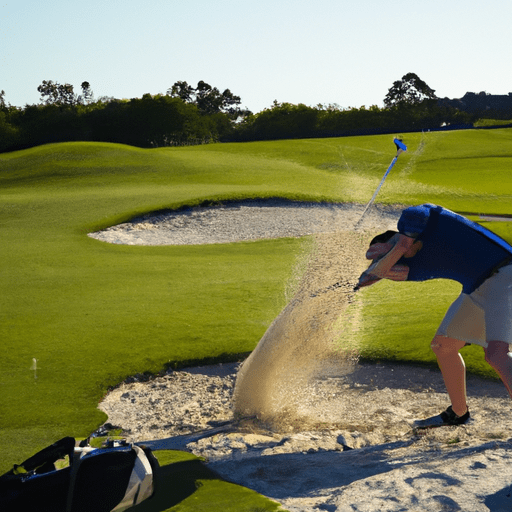
The article, “The Impact of Core Stability on Short Game Techniques in Golf,” explores the relationship between core stability and the effectiveness of short game techniques in golf. By examining the significance of a strong and stable core in achieving accurate and controlled shots, the article sheds light on the importance of this often-underestimated aspect of a golfer’s game. Through a comprehensive analysis of the biomechanics involved in short game techniques, the article highlights how core stability can improve shot accuracy, control, and overall performance on the golf course.
Importance of Core Stability in Golf
Benefits of a Strong Core in Golf
Core stability plays a crucial role in every aspect of the golf game, including short game techniques. The core muscles, which include the abdominals, lower back, and hips, provide a strong foundation for the golf swing and help generate power and control. A strong core allows golfers to maintain balance and stability throughout the swing, leading to more consistent shots and improved performance on the course.
Role of Core Stability in Golf Swing
The golf swing is a complex movement that requires a coordinated effort between different muscle groups, with the core muscles being central to generating power and maintaining balance. During the swing, the core muscles help stabilize the spine and pelvis, allowing for a smooth and efficient transfer of energy from the lower body to the upper body. This transfer of energy is critical for generating clubhead speed and maximizing distance.
The Relationship Between Core Stability and Short Game Techniques
Short game techniques, such as chipping and putting, rely heavily on precise body control and finesse. Core stability plays a vital role in these techniques by providing a stable base for executing precise movements. A strong and stable core allows golfers to maintain balance and control while executing delicate shots around the green. Without proper core stability, it becomes challenging to achieve the necessary control, resulting in inconsistent shots and missed opportunities.
Effects of Core Stability on Short Game Techniques
Improved Balance and Stability
One of the significant benefits of core stability training is improved balance and stability, which directly translates to better short game techniques in golf. A strong core allows golfers to maintain their body position and balance throughout the swing, enhancing their ability to execute precise shots. With improved balance, golfers can better control their body movements, allowing for more consistent and accurate chipping, pitching, and putting.
Enhanced Rotation and Power
A strong core enables golfers to rotate their upper body more effectively during short game techniques. This enhanced rotation allows for a more efficient transfer of energy, resulting in increased clubhead speed and improved distance control. With a stable core, golfers can generate more power during their short shots while maintaining control and accuracy.
Improved Control and Precision
Core stability plays a critical role in the fine motor control required for delicate short game techniques. By strengthening the core muscles, golfers can achieve better control over their body movements, allowing for more precise shots. Additionally, a stable core helps prevent any unwanted compensation movements, ensuring that the golfer can execute the desired shot with precision and consistency.
Exercises for Developing Core Stability
Plank Exercises
Plank exercises are an excellent way to develop core stability, focusing on strengthening the entire core, including the abdominals, lower back, and hips. The traditional plank involves holding a push-up position with the body straight and supported by the forearms and toes. This exercise activates the core muscles and helps develop stability and strength, which directly translates to improved short game techniques.
Russian Twists
Russian twists target the oblique muscles, which play a significant role in rotation and stability during the golf swing. To perform Russian twists, sit on the ground with your knees bent and feet flat on the floor. Hold a weight or medicine ball with both hands and rotate your torso from side to side, touching the ball or weight to the ground on each side. This exercise strengthens the obliques, improving rotational power and stability for short game techniques.
Medicine Ball Throws
Medicine ball throws are dynamic exercises that mimic the explosive movements required in the golf swing. These exercises help develop core power and stability while improving coordination and rotational strength. Examples of medicine ball throws include overhead slams, rotational throws, and chest passes. By incorporating medicine ball throws into their training routines, golfers can enhance their core stability and transfer that power into their short game techniques.
Incorporating Core Stability Training into Golf Practice
Warm-up Routines
Incorporating core stability exercises into warm-up routines is an effective way to prepare the body for golf practice or competition. Including exercises such as planks, Russian twists, and medicine ball throws can activate the core muscles and increase blood flow to the targeted area. This prepares the body for the demands of the golf swing, improving overall performance and reducing the risk of injury.
Specific Drills and Exercises
In addition to warm-up routines, specific drills and exercises can be incorporated into golf practice sessions to further develop core stability. This can include exercises such as stability ball exercises, resistance band exercises, and rotational movements. By focusing on exercises that target the core muscles, golfers can enhance their stability, power, and control, ultimately improving their short game techniques.
Integration into Overall Training Plan
To reap the full benefits of core stability training, golfers should integrate it into their overall training plan. This means incorporating core exercises into regular strength and conditioning workouts, ensuring that the core muscles are given adequate attention and development. By including a variety of core stability exercises, golfers can improve their overall physical fitness and enhance their short game performance.
Case Studies: Professionals and Core Stability
Success Stories of Golfers Utilizing Core Stability Training
Numerous professional golfers have experienced significant improvements in their short game techniques after incorporating core stability training into their routines. Players such as Tiger Woods and Brooks Koepka have highlighted the importance of core stability in their success and have credited their improved short game performance to targeted core exercises. These success stories serve as evidence of the positive impact that core stability training can have on golfers of all levels.
Analysis of Performance Differences Before and After Core Stability Training
Several studies have analyzed the performance differences in golfers before and after core stability training. These studies have consistently shown that core stability training leads to improvements in short game techniques, including increased accuracy, improved distance control, and enhanced control of finesse shots. These performance differences can be attributed to the strengthening of the core muscles, which play a critical role in executing precise movements required in the short game.
Challenges and Considerations
Individual Variations in Core Strength and Stability
It is essential to acknowledge that individuals have varying levels of core strength and stability. Some golfers may naturally have a stronger core, while others may require additional focus and training to develop this area. It is crucial for golfers to assess their core strength and stability levels and tailor their training accordingly. Consulting with a golf fitness professional or physical therapist can help determine any specific weaknesses and create a personalized plan for developing core stability.
Progression and Overload in Core Stability Exercises
As with any training program, progression and overload are essential considerations when developing core stability. Golfers should gradually increase the intensity, duration, and difficulty of core stability exercises to continue challenging their muscles and promoting further development. Pushing the body beyond its comfort zone leads to adaptation and improvement in core strength and stability. However, it is crucial to progress at a reasonable pace and avoid overexertion or injury.
Conclusion
Core stability is of utmost importance in golf, particularly for short game techniques. The benefits of a strong core include improved balance and stability, enhanced rotation and power, and improved control and precision. Golfers can develop core stability through exercises such as planks, Russian twists, and medicine ball throws. By incorporating core stability training into warm-up routines, practice sessions, and overall training plans, golfers can reap the rewards of improved short game performance. Understanding individual variations in core strength and considering progressive overload in training are essential for maximizing the benefits of core stability. With dedicated training and a focus on core stability, golfers can elevate their short game techniques and enhance their overall performance on the golf course.